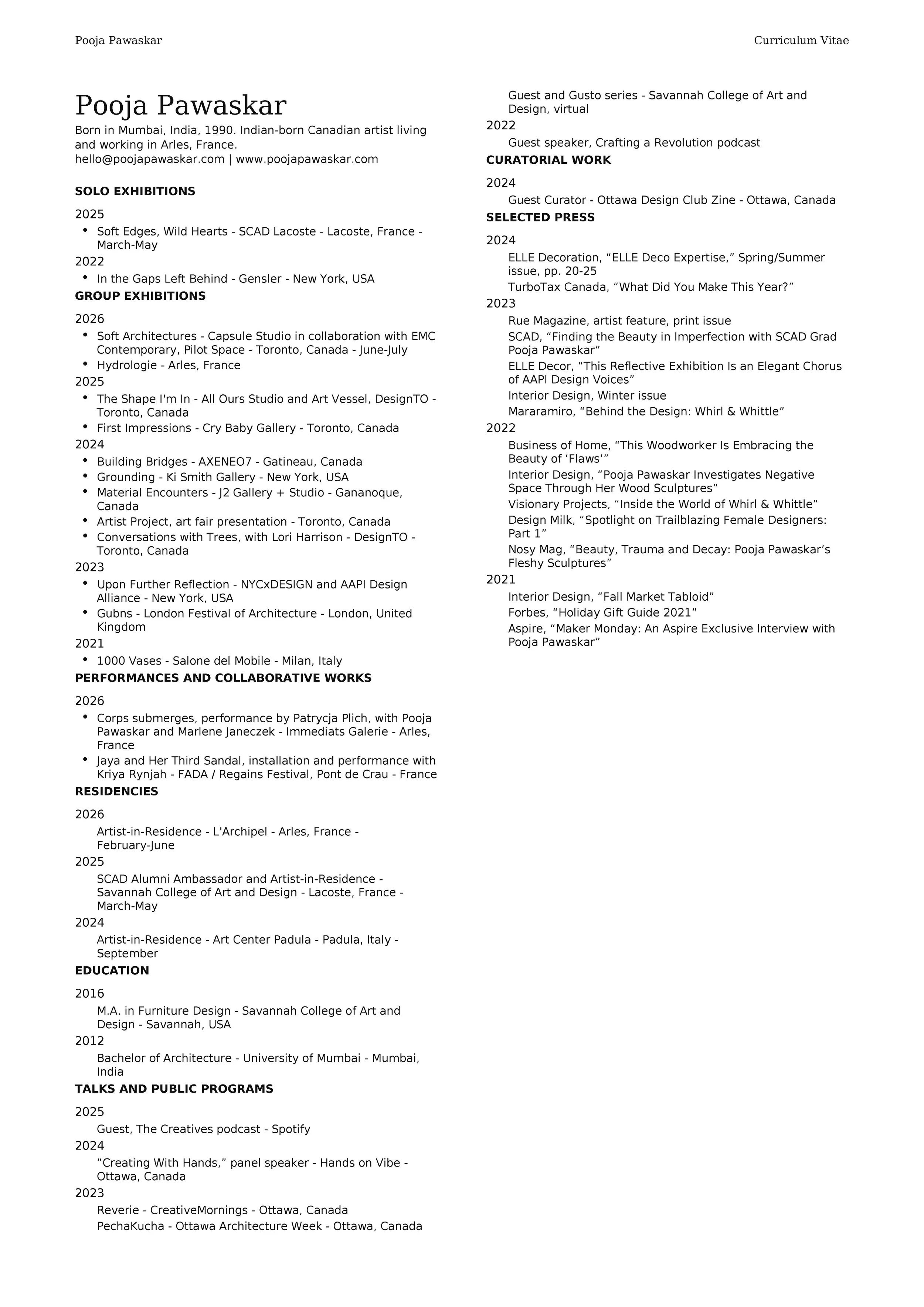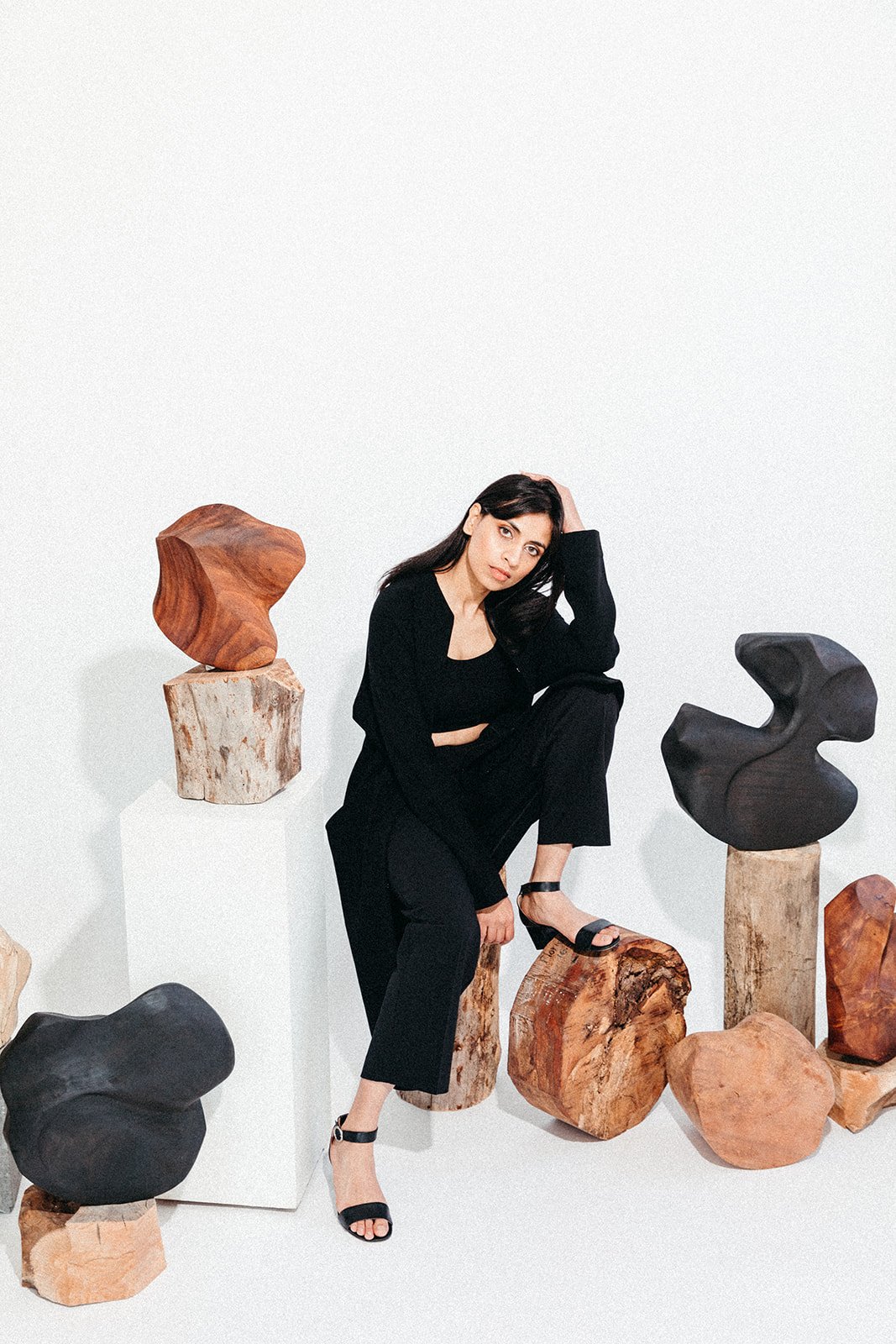
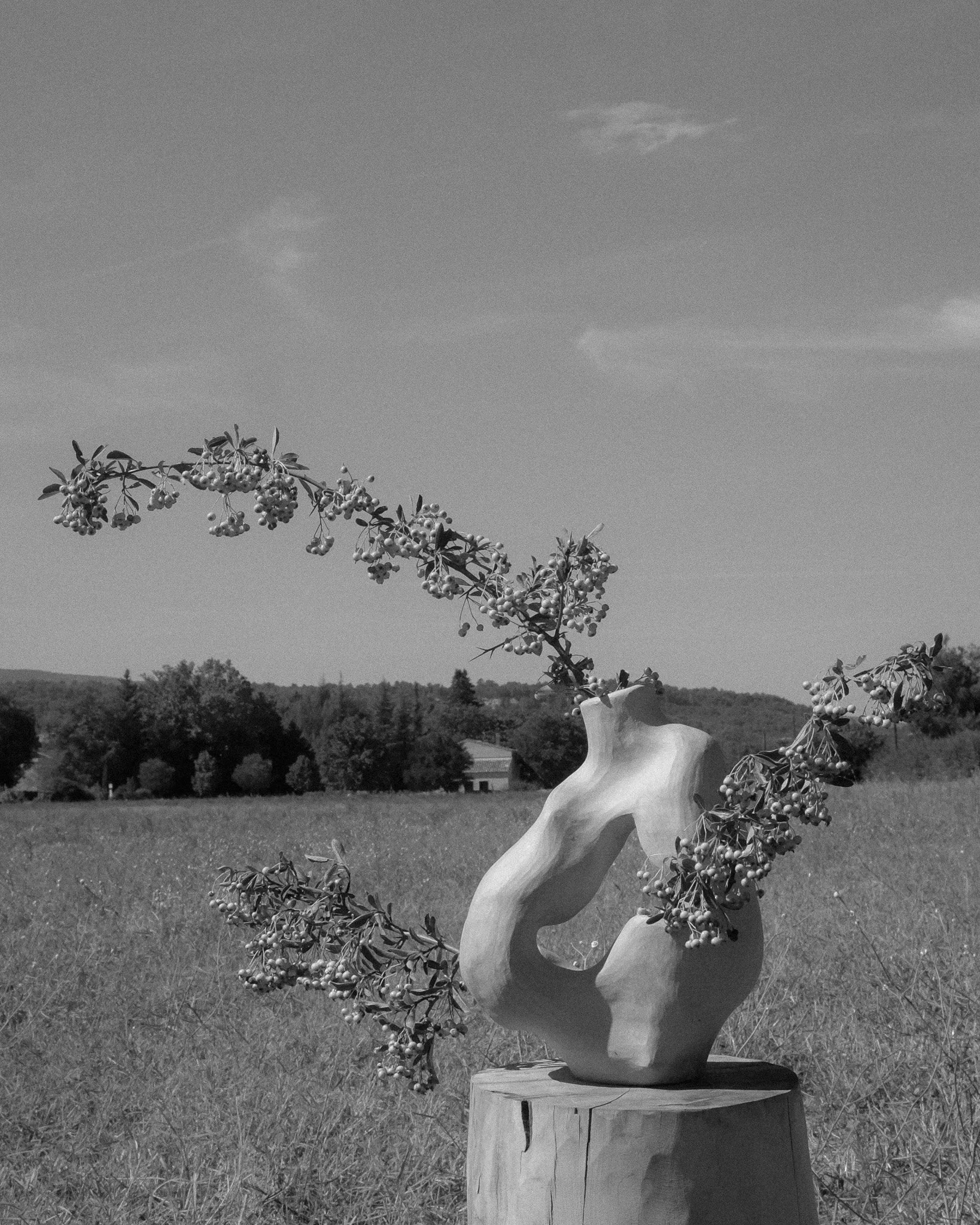
Pooja Pawaskar is an Indian-Canadian artist based in Arles, France. Working across wood, clay and drawing, she creates sculptural forms that investigate the body, vessel, containment and autonomy.
Born in Mumbai, Pawaskar holds a Bachelor of Architecture from the University of Mumbai and an MFA in Furniture Design from the Savannah College of Art and Design. Her practice developed in Canada before expanding to France, where a shift from carving wood to hand-building with clay opened new questions around interiority, accumulation and refusal.
Her work has been presented in Canada, the United States and France, including at DesignTO, NYCxDESIGN in collaboration with 3.1 Phillip Lim, and SCAD Lacoste. In 2026, she showcased her work at Capsule Studio in Toronto in collaboration with EMC Contemporary. In 2025, she was named SCAD Lacoste’s Alumni Ambassador Artist-in-Residence.
Biography


Artist Statement
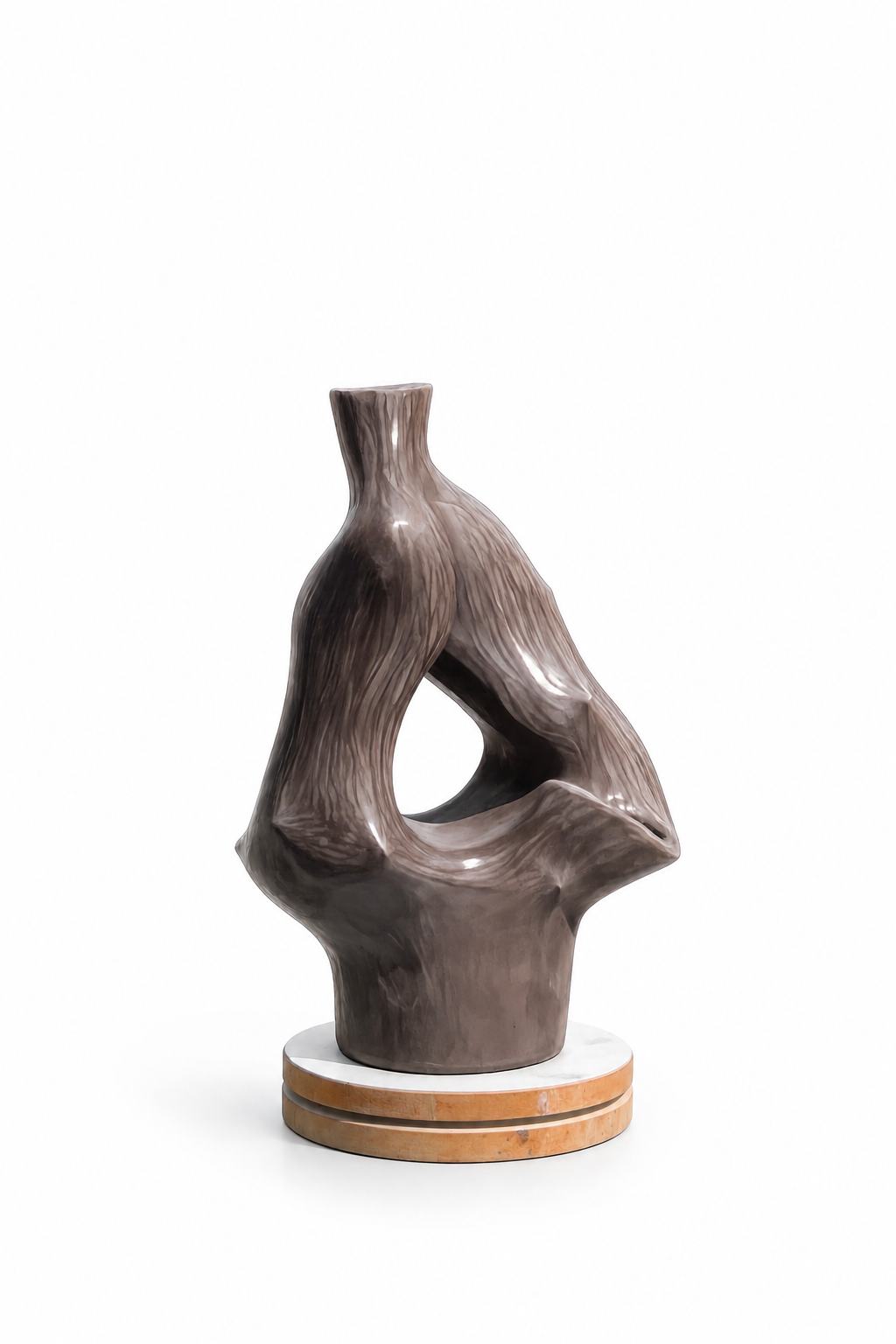
My practice investigates the body as a threshold between containment and autonomy, intimacy and exposure, what we are expected to hold and what we choose to refuse. I am interested in the vessel as both object and metaphor: a form defined by its capacity to contain, but whose identity persists even when it resists its prescribed function.
After years of carving wood, moving to France led me to begin working with clay. Wood taught me to think reductively, carving into solid mass and negotiating boundaries already present in the material. Clay reversed this relationship. Through coiling, I began with emptiness and built outward, constructing a boundary around an interior space. Moving between removal and accumulation transformed how I understood form.
The ceramic vessels that emerged bent, tilted, narrowed, and resisted their expected function. Some could not reliably hold water or flowers. Their refusal raised a question that became central to the work: if a vessel refuses what it was made to contain, is it still a vessel? For me, the answer is yes.
Informed by my experience as an Indian woman, I consider how bodies, particularly female bodies, are assigned expectations to contain, reproduce, nurture, restrain, and accommodate. Across wood and clay, bodily forms emerge without representing the body directly.
Containment, however, is not only constraint. To be held can also mean to be understood and met with reciprocity. My work occupies this tension, asking who determines the boundaries of a body, what it is expected to hold, and what becomes possible when it defines those boundaries for itself.